The 2025 Relay Review: Innovation, Sustainability, and What’s Next.
As 2025 comes to a close, we’re taking a moment to look back at a year defined by bold ideas, smarter systems, and meaningful progress. At Relay, innovation and sustainability have always been intertwined—and this year was no exception.
From breakthrough design solutions to new steps forward in responsible production, 2025 pushed us to reimagine what’s possible. In this annual review, we’re sharing the developments that shaped our work, the milestones reached, and a glimpse of what’s ahead.
Let’s take a look at the ideas that moved us forward.
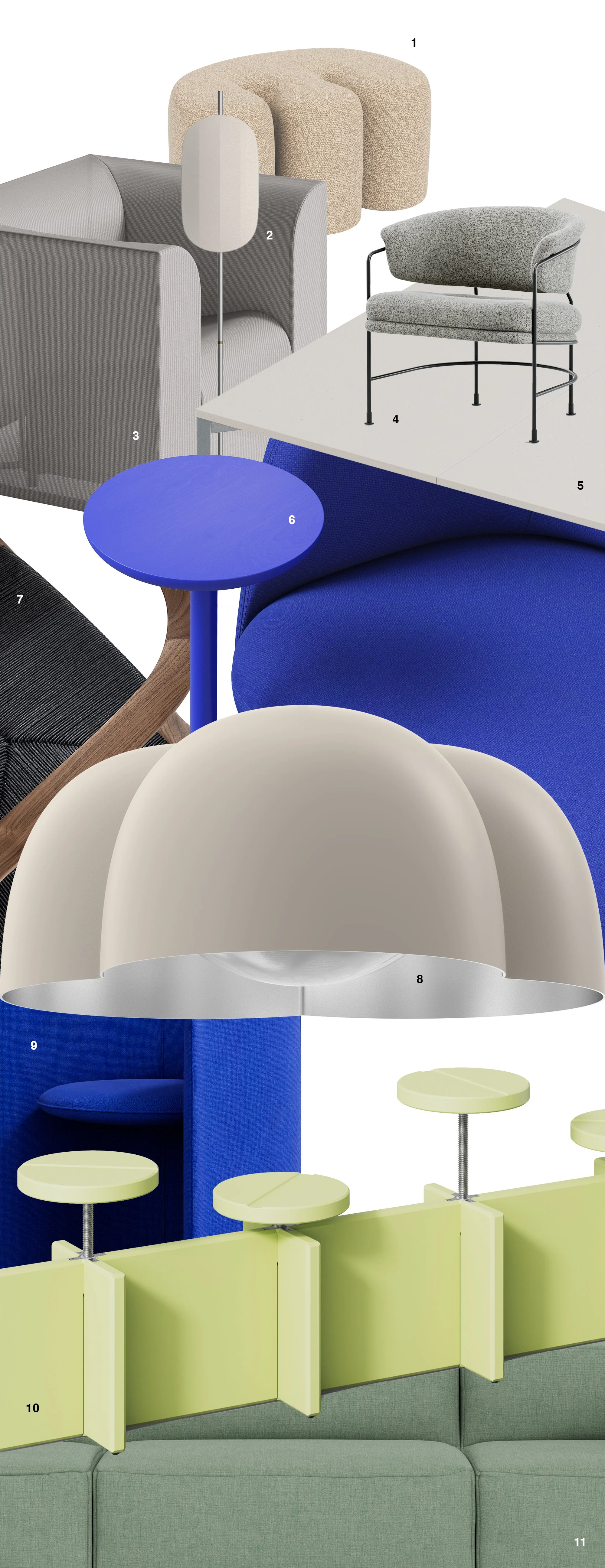
1. Palma (designed by Kusheda Mensah from Hem) 2. Voyage (designed by ByMars for Ago Lighting) 3. Shrinx (designed by Boris Berlin for +Halle) 4. Astro Club chair (designed by Chris Martin for Massproductions) 5. Grid tables (designed by Industrial Facility for +Halle) 6. Nest Club (designed by Form Us With Love for +Halle) 7. Pelle (designed by Lorenz & Kaz for Zeitraum), 8. Cotton (designed by Sebastien Herkner for Ago Lighting) 9. Proto Armchair (designed by Nick Ross for +Halle) 10. ADP (designed by Spacon for +Halle) 11. The Great Sofa (designed by Philippe Malouin for Hem.
Reduction, reuse and adaptation.
The reduction of upholstery foam was a key design theme that threaded through 2025. From the material research behind Shrinx (designed by Boris Berlin for +Halle), whose design provides a template for excluding foam entirely. This new lounge chair is both a protest and a venture into a new category of upholstery for the future. This approach is echoed by the work of Lorenz + Kaz, whose chairs, Pelle and Sit (both for Zeitraum), looked towards traditional paperwork & weaving to provide alternatives to foam materials.
Other offerings included the Astro Club chair (designed by Chris Martin for Massproductions) and the Proto Armchair (designed by Nick Ross for +Halle). Both borrowing from the legacy of modernism, their latest works seek to strip back form to the bare minimum, translating natural forms into minimalist structures. These structures reduce the use of foam to a minimum, driven by reductions in carbon footprints and a push towards circular materials.
These circular materials include Baux’s new X-FELT (pictured below) nano-engineered and 3D printed to meet rigorous fire safety standards without the need for mineral or chemical treatment.
Other circular materials include +Halle’s new Grid tables (designed by Industrial Facility) which utilise Really, a high-quality circular material made from upcycled end-of-life textiles.
The theme of adaptation for future use is perhaps best exemplified by The Great Sofa (designed by Philippe Malouin for Hem), which utilises an innovative lamination process for its upholstery. Through this process, the upholstery gains a new sculptural quality. Designed into oversized covers, which Malouin compares to a hoodie sweatshirt, these can be removed, adapted and replaced.
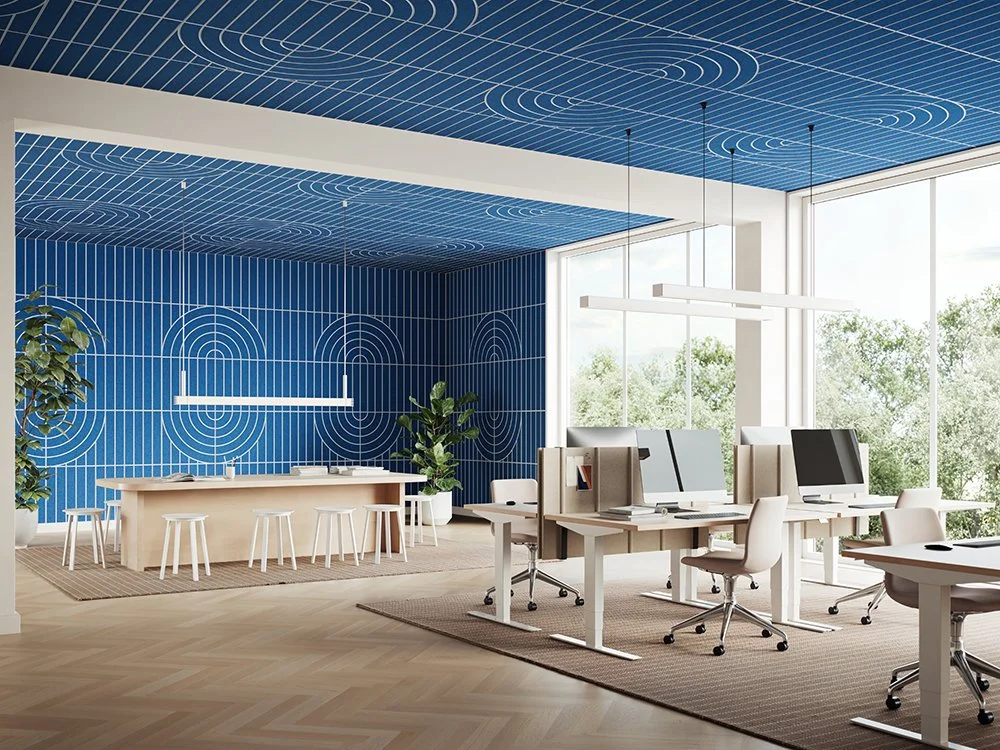
Baux’s new X-FELT nano-engineered and 3D printed to meet fire standards without chemicals or minerals.
Adaptation, Engagement and Play.
Adaptation can also be seen in new lighting by Sebastian Herkner for Ago Lighting where the user is invited to engage with the lamp's form to adjust the spill of light. Prompting the user to interact with the design physically broadens this theme of adaptation into important forthcoming trends around engagement and play.
The theme of Play is best illustrated by Spacon's research on the topic, carried out as part of +Halle’s Annual Briefing. Their new bench ADP (Adults Dont Play) prompts adaptation and movement, resulting in a playfulness that is rarely seen in product design. This theme is also illustrated in the new Palma collection (designed by Kusheda Mensah from Hem). Her new collection of seating brings an unorthodox playfulness into the space, simultaneously graphically arresting and refreshingly carefree.